AWD vs 4WD: which do you need in Kenya?
For tarmac and town driving, two-wheel drive is all you need. But for murram, rainy-season mud, steep upcountry roads and game parks, the type of drive — and the ground clearance — makes a real difference.
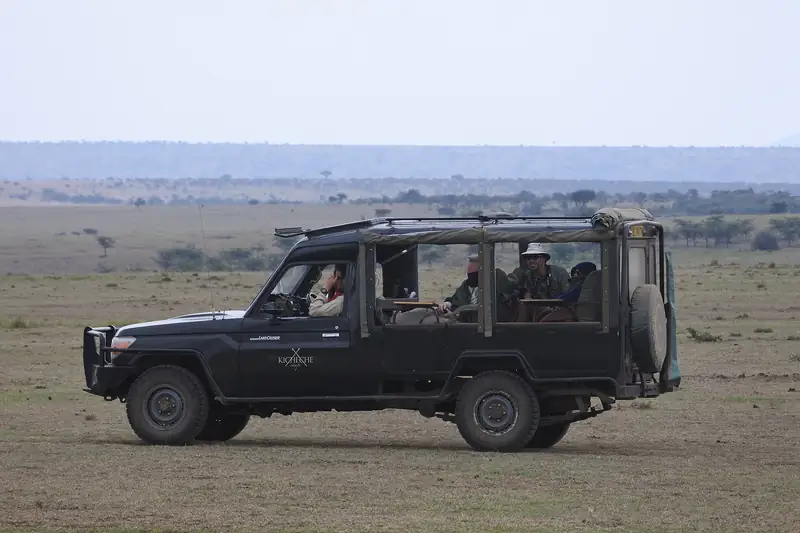
Photo: flightlog · CC BY 2.0, Wikimedia Commons
Two-wheel drive (FWD and RWD)
Most small cars and saloons drive the front wheels (FWD) — the Vitz, Axio, Note, Demio and Fit. It’s light, economical, and fine on tarmac and light murram. Some saloons and older pickups drive the rear wheels (RWD), like the Mark X.
AWD: all-wheel drive
AWD drives all four wheels automatically, with no buttons to press. There are two kinds.
Full-time AWD — like Subaru’s Symmetrical AWD in the Forester, Outback and XV — always drives all four wheels, which gives excellent grip on murram and in the rain.
On-demand AWD — in the 4WD versions of the RAV4, Harrier, X-Trail and CX-5 — drives the front wheels most of the time and sends power to the rear when the front starts to slip. It’s more economical and handles wet roads and light murram well.
4WD with low range
True four-wheel drive — the Prado, Land Cruiser, Hilux, Pajero, D-Max and Fortuner — adds a transfer case with low-range gears for steep, rough or muddy tracks, and often a locking differential. Pickups like the Hilux and D-Max usually have part-time 4WD: you select 4H or 4L when you need it and drive in 2WD on tarmac. The Prado and Land Cruiser have full-time 4WD.
Which do you need?
- Town and tarmac: 2WD is fine — and saves on fuel and servicing.
- Murram, estate roads and rainy-season trips: AWD with at least 190–200 mm of ground clearance.
- Farms, rough upcountry tracks, game parks and towing: 4WD with low range and 210 mm or more of clearance.
- Whatever the drive, good tyres matter as much as the drivetrain — all-terrain tyres transform grip on murram.
Which models have which drive
4WD
- Isuzu D-Max
- Land Rover Range Rover Sport
- Lexus LX 570
- Mitsubishi Pajero
- Toyota Fortuner
- Toyota Hilux
- Toyota Land Cruiser 200 (V8)
- Toyota Land Cruiser 300
- Toyota Land Cruiser 70
- Toyota Land Cruiser Prado
AWD
RWD
FWD
- Honda Fit
- Honda Vezel
- Mazda CX-5
- Mazda Demio
- Nissan Dayz
- Nissan Juke
- Nissan March
- Nissan Note
- Nissan Wingroad
- Suzuki Swift
- Toyota Alphard
- Toyota Aqua
- Toyota Auris
- Toyota Corolla
- Toyota Corolla Axio / Fielder
- Toyota Corolla Cross
- Toyota Harrier
- Toyota Isis
- Toyota Noah / Voxy
- Toyota Passo
- Toyota Premio / Allion
- Toyota Prius
- Toyota Probox / Succeed
- Toyota Raize
- Toyota Sienta
- Toyota Vitz
- Toyota Wish
What to check before you buy
- On a 4WD, engage 4H and 4L on a loose surface: they should engage cleanly, and the 4WD lights should come on and go off.
- On an AWD car, all four tyres should match in size and wear.
- Listen for clunks or whines from the differentials when turning tightly.
Models this applies to
- Subaru Forester — 146–276 hp, 2013–2017
- Subaru Outback — 173 hp, 2015–2019
- Subaru XV / Impreza — 152 hp, 2014–2018
- Toyota RAV4 — 169 hp, 2019–2021
- Toyota Harrier — 149 hp, 2014–2019
- Nissan X-Trail — 145 hp, 2014–2019
- Mazda CX-5 — 153–187 hp, 2015–2020
- Toyota Land Cruiser Prado — 161–201 hp, 2012–2021
- Toyota Hilux — 148–201 hp, 2016–2022
- Mitsubishi Pajero — 197 hp, 2012–2018
- Isuzu D-Max — 188 hp, 2021–2024
- Toyota Fortuner — 177 hp, 2015–2020
Frequently asked questions
Is AWD the same as 4WD?
No. AWD drives all four wheels automatically and is designed for grip on wet roads and murram. 4WD adds low-range gears (and often diff locks) for steep, rough and muddy tracks.
Do I need 4WD in Kenya?
Only for rough tracks, farms, game parks or towing. For tarmac, estate roads and occasional murram, a 2WD or AWD car with good ground clearance is enough — and cheaper to run.
Is Subaru AWD permanent?
Yes. Subaru’s Symmetrical AWD drives all four wheels all the time, which is why Subarus grip so well in the rain and on murram.
Keep reading
- Mazda SkyActiv engines: common problems and how to avoid them
- Subaru CVT and boxer engines: reliability and maintenance in Kenya
- Toyota VVT-i and Valvematic engines: common issues and fixes
- Nissan CVT gearboxes: what goes wrong and how to avoid it
- Modern diesels in Kenya: DPF, injector and turbo problems