Subaru CVT and boxer engines: reliability and maintenance in Kenya
Subarus are loved in Kenya for their grip, ground clearance and upcountry ability. They’re well engineered, but they punish neglected maintenance more than a Toyota does — especially the CVT gearbox and the all-wheel-drive system.
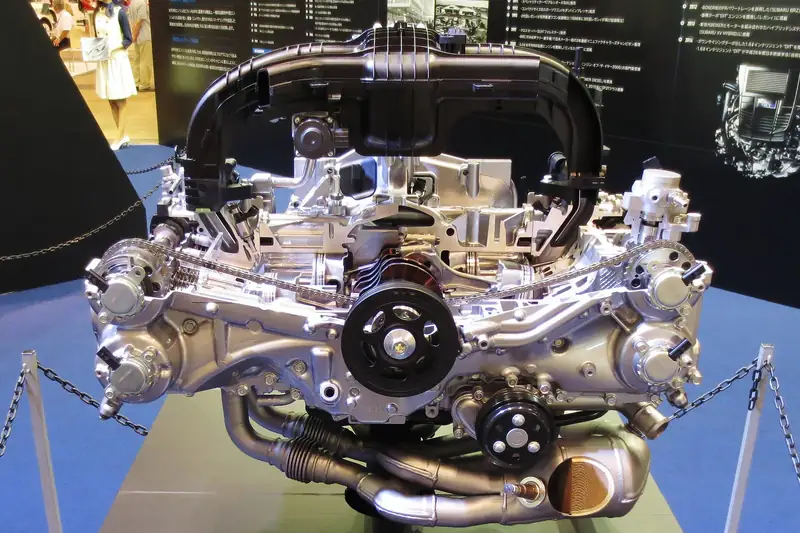
Photo: Qurren · CC BY-SA 3.0, Wikimedia Commons
The Lineartronic CVT
Most Subarus built since about 2010 — including the Forester SJ, the XV and the Outback — use Subaru’s chain-type CVT, called Lineartronic. It’s smooth and economical when its fluid is fresh and it isn’t overheated.
Subaru treats the fluid as long-life in many markets, but many Subaru specialists recommend changing it every 40,000–60,000 km on cars that work hard in heat, hills, dust or heavy traffic. Warning signs are a shudder when pulling away, a whine that rises with speed, slipping, or a flashing AT oil temperature or AWD light. A replacement gearbox is expensive, so test it carefully.
Boxer engines
Newer FB engines (FB20, FB25 — from around 2011) use a timing chain. Some early FB engines from roughly 2011–2014 were known to burn oil, so check the oil level regularly.
Older EJ engines (EJ20, EJ25) use a timing belt that must be replaced on schedule — around every 100,000 km — and the EJ25 in particular is known for head-gasket leaks. Turbo models such as the Forester XT need good oil changed on time and a short idle before switching off after hard driving.
Why a Subaru needs four matching tyres
Subaru’s Symmetrical AWD drives all four wheels all the time. If one tyre is a different size, brand or much more worn than the others, the wheels turn at slightly different speeds and the drivetrain is constantly strained — which can damage it. Replace tyres in sets of four, or at least keep all four the same size and with similar tread depth.
Parts and servicing
Subaru parts are widely available in Nairobi through specialist dealers and Subaru garages, but they cost more than Toyota parts, and not every mechanic knows the boxer engine. Choose a mechanic who works on Subarus every day.
What to check before you buy
- Test the CVT from a standstill and up a hill: no shudder, whine or slipping.
- No AWD, AT oil temperature or engine warning lights.
- Look under the engine for oil leaks around the cylinder heads.
- All four tyres the same size and brand, with similar wear.
- Service records showing oil changes, CVT fluid and — on EJ engines — the timing belt.
Models this applies to
- Subaru Forester — 146–276 hp, 2013–2017
- Subaru Outback — 173 hp, 2015–2019
- Subaru XV / Impreza — 152 hp, 2014–2018
Frequently asked questions
Is the Subaru CVT reliable?
It is reliable when the fluid is changed and the car isn’t overheated or abused. Neglected CVTs judder and are costly to repair, so buy with service records and test it well.
Is Subaru all-wheel drive permanent?
Yes. Subaru’s Symmetrical AWD sends power to all four wheels all the time, which is why it grips so well on murram and in the rain — and why all four tyres must match.
Are Subaru spare parts available in Kenya?
Yes, especially in Nairobi through Subaru specialists and parts dealers, though they cost more than Toyota parts. Budget a little more for servicing.
Keep reading
- Mazda SkyActiv engines: common problems and how to avoid them
- Toyota VVT-i and Valvematic engines: common issues and fixes
- Nissan CVT gearboxes: what goes wrong and how to avoid it
- Hybrid cars in Kenya: battery lifespan, warning signs and replacement
- Modern diesels in Kenya: DPF, injector and turbo problems