Modern diesels in Kenya: DPF, injector and turbo problems
Turbo-diesels — in the Prado, Hilux, Land Cruiser, Fortuner, D-Max, Pajero and CX-5 — give Kenya’s favourite workhorses their pulling power and range. Most of their expensive failures are preventable with the right fuel habits, maintenance and driving.
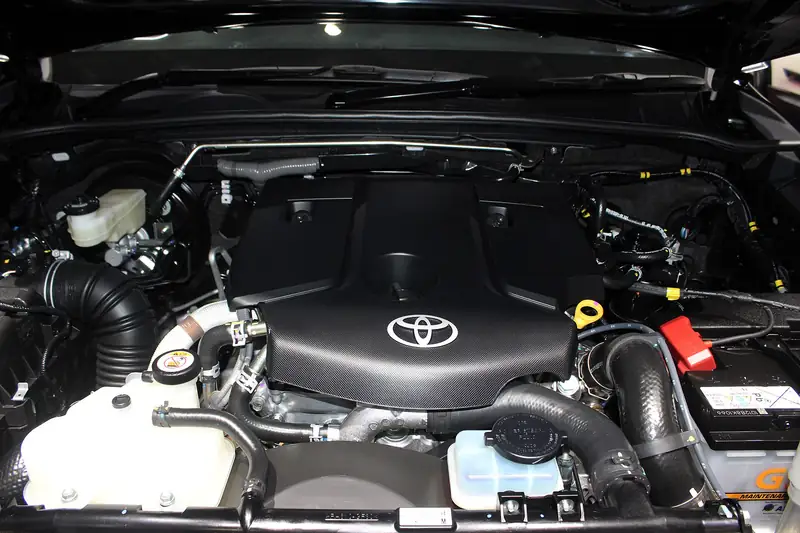
Photo: オーバードライブ83 · CC BY-SA 4.0, Wikimedia Commons
Diesel particulate filters (DPF)
Newer diesels — including Toyota’s GD engines (2.4 and 2.8 GD-6), Mazda’s SkyActiv-D and many others — have a DPF that traps soot and burns it off on longer, faster drives. A diet of short trips clogs it: a warning light comes on, power drops and, if it’s ignored, the filter needs expensive cleaning or replacement. Some models have a switch to start a cleaning cycle — the owner’s manual explains when to use it. Regular highway runs keep it healthy.
Injectors and fuel
Diesel injectors work at very high pressure and hate dirty or watery fuel. Buy diesel from busy, reputable stations, change the fuel filter on schedule and drain the water separator when the warning light asks. On older Toyota 1KD and 2KD D-4D engines, a leaking injector seal lets combustion gases escape and build up carbon around the injector — listen for a ticking or chuffing sound at idle.
Turbos and EGR
The turbo spins on engine oil, so oil changes on time matter, and after a hard drive let the engine idle for 30–60 seconds before switching off. The EGR system recirculates some exhaust gas and can clog with soot over time, causing rough running and smoke.
Is a diesel right for you?
Diesels are best for upcountry trips, towing, heavy loads and high mileage. If you mostly do short trips in town, a petrol or hybrid will usually be cheaper and less trouble.
What to check before you buy
- Start it cold: no long cranking, heavy smoke or knocking.
- At idle: no ticking or chuffing from around the injectors.
- On the drive: strong pull with no black smoke, and no engine, DPF or water-in-fuel warnings.
- Check the oil level and condition, and look for oil around the turbo pipes.
- Ask for records of oil and fuel-filter changes and — on DPF engines — how the car was driven.
Models this applies to
- Toyota Land Cruiser Prado — 161–201 hp, 2012–2021
- Toyota Hilux — 148–201 hp, 2016–2022
- Toyota Land Cruiser 200 (V8) — 268 hp, 2015–2020
- Toyota Land Cruiser 300 — 304 hp, 2022–2024
- Toyota Fortuner — 177 hp, 2015–2020
- Toyota Land Cruiser 70 — 202 hp, 2007–2023
- Isuzu D-Max — 188 hp, 2021–2024
- Mitsubishi Pajero — 197 hp, 2012–2018
- Mazda CX-5 — 153–187 hp, 2015–2020
Frequently asked questions
Why does my diesel DPF light come on?
The filter is full of soot because the car hasn’t done a long enough drive to clean it. A steady highway drive of 20–30 minutes usually clears it; if the light stays on, see a mechanic before it gets worse.
Are Toyota GD-6 engines good?
Yes — the 2.4 and 2.8 GD engines in the Hilux, Prado and Fortuner are strong and economical. Like all modern diesels, they need clean fuel, on-time servicing and regular longer drives for the DPF.
Should I buy a diesel or a petrol car in Kenya?
A diesel suits upcountry driving, towing, heavy loads and high mileage. For mostly short town trips, a petrol or hybrid is usually cheaper to run and maintain.
Keep reading
- Mazda SkyActiv engines: common problems and how to avoid them
- Subaru CVT and boxer engines: reliability and maintenance in Kenya
- Toyota VVT-i and Valvematic engines: common issues and fixes
- Nissan CVT gearboxes: what goes wrong and how to avoid it
- Hybrid cars in Kenya: battery lifespan, warning signs and replacement