Volkswagen Up! specs, fuel consumption & ground clearance
The Volkswagen Up! in Kenya: 1 version from 2011–2021, 74 hp, 21 km/L, 147 mm ground clearance.
Updated
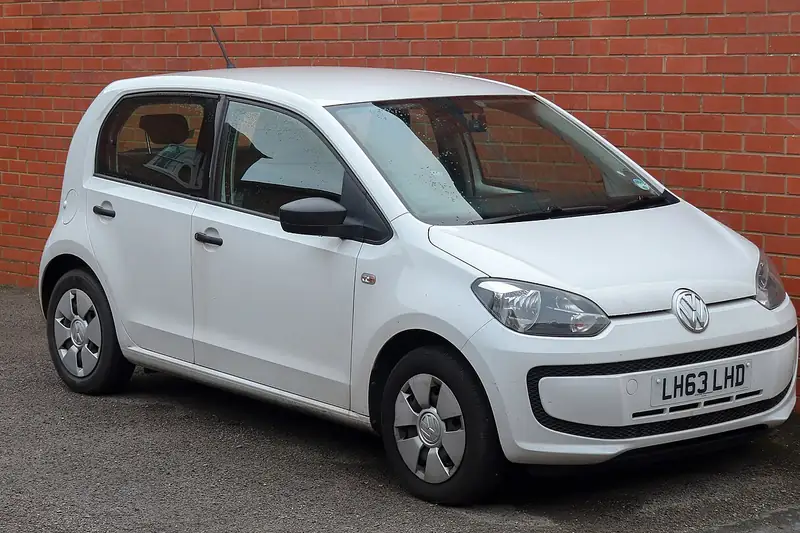
Pictured: 2013 Volkswagen Take UP! 1.0. Photo: Vauxford · CC BY-SA 4.0, Wikimedia Commons
All versions at a glance
| Version | Power | Torque | Clearance | Economy | Fuel / month* |
|---|---|---|---|---|---|
1.0L 3-cyl (Up! (Typ AA)) 1.0L CHYA inline-3 · Manual · FWD · 2011–2021 | 74 hp | 95 Nm | 147 mm | 21 km/L | KES 16,200 |
*1,500 km a month at KES 226.96 per litre of petrol (EPRA Nairobi, 15 Oct – 14 Nov 2026) (diesel: KES 227.76/L). Typical factory figures — individual cars vary.
Volkswagen Up! 1.0L 3-cyl (2011–2021)
Generation Up! (Typ AA) · 2011–2021 · source: GariAI lookup of manufacturer data
- Power
- 74 hp
- Torque
- 95 Nm
- Engine
- 1.0L 3-cyl (1.0L CHYA inline-3)
- Engine size
- 999 cc
- Cylinders
- 3
- Fuel
- Petrol
- Transmission
- Manual
- Drivetrain
- FWD
- Ground clearance
- 147 mm
- Fuel economy
- 21 km/L
- Fuel tank
- 35 litres
- Weight
- 929 kg
- Seats
- 4
- 0–100 km/h
- 13.2 s
Kenya Fit
- Fuel saver21 km/L — about KES 16,200 a month for 1,500 km at today’s pump price.
What it means in plain English
Power — 74 hp, “Gentle”. Plenty for town. Plan highway overtakes carefully — especially with a full car and the AC on.
Torque — 95 Nm, “Light”. Fine for a light car in town. It will feel strained climbing hills with passengers.
Ground clearance — 147 mm, “Saloon”. Fine on tarmac. Take bumps slowly, at an angle, and avoid deep ruts.
Fuel economy — 21 km/L, “Very frugal”. Among the cheapest cars to run in Kenya. Ideal for Uber/Bolt and long commutes. At KES 226.96 per litre of petrol (EPRA Nairobi, 15 Oct – 14 Nov 2026), 1,000 km costs about KES 10,800, 1,500 km about KES 16,200 and 2,500 km about KES 27,000.
Engine — 3 cylinders, “The frugal trio”. Light and nimble with a slight thrum at idle. Happiest in town. Very low fuel use, cheap parts. Feels breathless on long hills when loaded.
The 2013 Volkswagen Up is a compact city car that appeals to Kenyan buyers looking for exceptional fuel economy and effortless maneuverability in congested urban traffic. Its clever packaging offers surprising interior space for a small footprint, making daily commutes and tight parking spaces hassle-free. With low maintenance costs and impressive build quality, it serves as an economical entry-level vehicle or secondary runabout, though its modest engine performance is best suited for city driving rather than heavy highway overtaking.
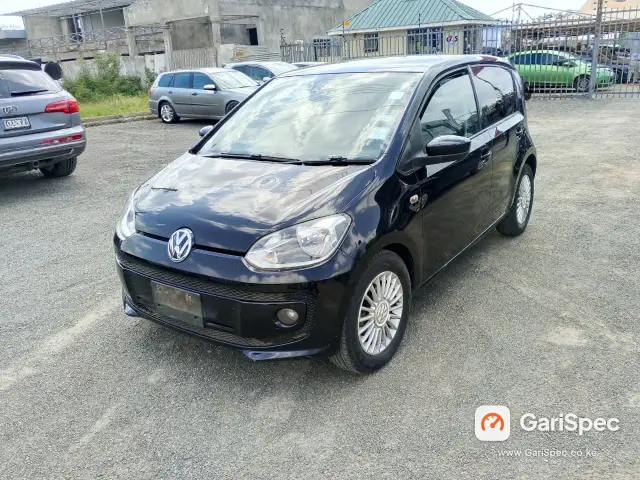
Volkswagen Up! for sale now
Frequently asked questions
How much horsepower does the Volkswagen Up! have?
Depending on the version, the Volkswagen Up! makes 74 hp — 1.0L 3-cyl (2011–2021): 74 hp and 95 Nm. Plenty for town. Plan highway overtakes carefully — especially with a full car and the AC on.
What is the Volkswagen Up!’s fuel consumption per km?
1.0L 3-cyl: 21 km/L (4.8 L/100 km) — about KES 10.8 per km (≈ KES 16,200 a month for 1,500 km). Costs use KES 226.96 per litre of petrol (EPRA Nairobi, 15 Oct – 14 Nov 2026) and diesel at KES 227.76/L. These are factory figures — Nairobi traffic uses more.
What is the ground clearance of the Volkswagen Up!?
About 147 mm (14.7 cm). Fine on tarmac. Take bumps slowly, at an angle, and avoid deep ruts.
What engine does the Volkswagen Up! use?
The Volkswagen Up! in Kenya comes with: 1.0L CHYA inline-3. Very low fuel use, cheap parts. Feels breathless on long hills when loaded.
Is the Volkswagen Up! 2WD, AWD or 4WD?
Versions sold in Kenya are FWD. Two-wheel drive is fine on tarmac and light murram.
Are Volkswagen Up! spare parts available in Kenya?
Volkswagen parts are available in Nairobi and other major towns, but cost more than Toyota parts and some need ordering. Use a mechanic who knows the brand.
How many seats does the Volkswagen Up! have?
4 seats.
Related
- Spec School — what every spec means
- Import a Volkswagen Up! — KRA duty and landed cost
Typical factory figures for each version; versions marked “GariAI lookup” come from manufacturer data and haven’t been checked by our team yet. Individual cars vary with trim, market and condition — confirm against the car’s documents and auction sheet. Spot a mistake? Tell us.