Volkswagen Tiguan specs, fuel consumption & ground clearance
The Volkswagen Tiguan in Kenya: 4 versions from 2011–2024, 150–184 hp, 11.8–14.1 km/L, 190–200 mm ground clearance.
Updated
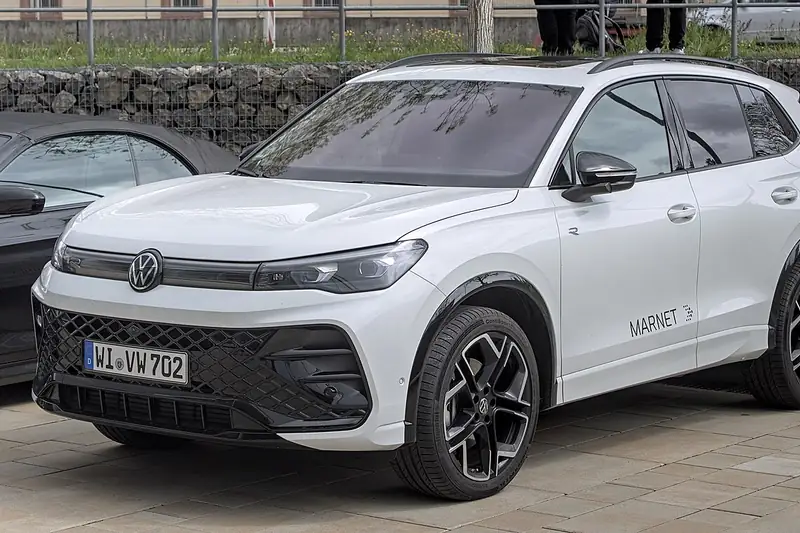
Pictured: Volkswagen Tiguan III. Photo: Alexander-93 · CC BY-SA 4.0, Wikimedia Commons
All versions at a glance
| Version | Power | Torque | Clearance | Economy | Fuel / month* |
|---|---|---|---|---|---|
1.4L 4-cyl turbo (5N Facelift) 1.4L CAXA turbo inline-4 · Automatic · AWD · 2011–2016 | 160 hp | 240 Nm | 200 mm | 12 km/L | KES 28,400 |
2.0L 4-cyl turbo (5N (Facelift)) 2.0L CCZA turbo inline-4 · Automatic · AWD · 2011–2016 | 177 hp | 280 Nm | 200 mm | 11.8 km/L | KES 28,900 |
1.4L 4-cyl turbo (AD1) 1.4L CZDA turbo inline-4 · Dual-Clutch · AWD · 2016–2024 | 150 hp | 250 Nm | 200 mm | 14.1 km/L | KES 24,100 |
2.0L 4-cyl (AD) 2.0L EA888 inline-4 · Dual-Clutch · FWD · 2016–2020 | 184 hp | 320 Nm | 190 mm | 12.5 km/L | KES 27,200 |
*1,500 km a month at KES 226.96 per litre of petrol (EPRA Nairobi, 15 Oct – 14 Nov 2026) (diesel: KES 227.76/L). Typical factory figures — individual cars vary.
Volkswagen Tiguan 1.4L 4-cyl turbo (2011–2016)
Generation 5N Facelift · 2011–2016 · source: GariAI lookup of manufacturer data
- Power
- 160 hp
- Torque
- 240 Nm
- Engine
- 1.4L 4-cyl turbo (1.4L CAXA turbo inline-4)
- Engine size
- 1,390 cc
- Cylinders
- 4
- Fuel
- Petrol
- Transmission
- Automatic
- Drivetrain
- AWD
- Ground clearance
- 200 mm
- Fuel economy
- 12 km/L
- Fuel tank
- 64 litres
- Weight
- 1,501 kg
- Seats
- 5
- 0–100 km/h
- 8.9 s
Kenya Fit
- Murram-ready200 mm of ground clearance handles murram, potholes and tall estate bumps.
What it means in plain English
Power — 160 hp, “Confident”. The Kenyan sweet spot: safe, quick overtakes on Nairobi–Nakuru with room to spare when fully loaded.
Torque — 240 Nm, “Moderate”. Pulls a family car well. You will hear the engine work up the Kikuyu–Limuru escarpment.
Ground clearance — 200 mm, “SUV”. Comfortable on murram, rough estate roads and through rainy-season puddles.
Fuel economy — 12 km/L, “Average”. Typical for an SUV or larger saloon. At KES 226.96 per litre of petrol (EPRA Nairobi, 15 Oct – 14 Nov 2026), 1,000 km costs about KES 18,900, 1,500 km about KES 28,400 and 2,500 km about KES 47,300.
Engine — 4 cylinders, “Kenya’s workhorse”. Smooth enough, economical, and strong when turbocharged — especially as a diesel. A simple layout, but Volkswagen parts cost more than Toyota’s and are mostly found in Nairobi and major towns — use a specialist.
The 2014 Volkswagen Tiguan is a popular compact SUV in Kenya, favored for its solid build quality, premium interior, and responsive turbocharged performance. It offers a comfortable ride and practical cabin space suitable for family use and daily commuting. While its European pedigree brings a sense of refinement and safety, Kenyan buyers should budget for specialized maintenance and premium fuel to keep the TSI engine running reliably.
Volkswagen Tiguan 2.0L 4-cyl turbo (2011–2016)
Generation 5N (Facelift) · 2011–2016 · source: GariAI lookup of manufacturer data
- Power
- 177 hp
- Torque
- 280 Nm
- Engine
- 2.0L 4-cyl turbo (2.0L CCZA turbo inline-4)
- Engine size
- 1,984 cc
- Cylinders
- 4
- Fuel
- Petrol
- Transmission
- Automatic
- Drivetrain
- AWD
- Ground clearance
- 200 mm
- Fuel economy
- 11.8 km/L
- Fuel tank
- 64 litres
- Weight
- 1,546 kg
- Seats
- 5
- 0–100 km/h
- 7.9 s
Kenya Fit
- Murram-ready200 mm of ground clearance handles murram, potholes and tall estate bumps.
What it means in plain English
Power — 177 hp, “Confident”. The Kenyan sweet spot: safe, quick overtakes on Nairobi–Nakuru with room to spare when fully loaded.
Torque — 280 Nm, “Strong”. Relaxed hill climbs and confident pulling with a full boot — no need to rev hard.
Ground clearance — 200 mm, “SUV”. Comfortable on murram, rough estate roads and through rainy-season puddles.
Fuel economy — 11.8 km/L, “Average”. Typical for an SUV or larger saloon. At KES 226.96 per litre of petrol (EPRA Nairobi, 15 Oct – 14 Nov 2026), 1,000 km costs about KES 19,200, 1,500 km about KES 28,900 and 2,500 km about KES 48,100.
Engine — 4 cylinders, “Kenya’s workhorse”. Smooth enough, economical, and strong when turbocharged — especially as a diesel. A simple layout, but Volkswagen parts cost more than Toyota’s and are mostly found in Nairobi and major towns — use a specialist.
The 2012 Volkswagen Tiguan is a popular compact SUV in Kenya, favored for its solid build quality, premium interior feel, and capable 4Motion all-wheel-drive system. It offers a comfortable ride, practical cabin space, and responsive performance from its turbocharged engine, making it well-suited for both daily urban commuting and weekend getaways. While German engineering delivers refined driving dynamics, buyers should budget for regular specialized maintenance and premium fuel to keep it running reliably.
Volkswagen Tiguan 1.4L 4-cyl turbo (2016–2024)
Generation AD1 · 2016–2024 · source: GariAI lookup of manufacturer data
- Power
- 150 hp
- Torque
- 250 Nm
- Engine
- 1.4L 4-cyl turbo (1.4L CZDA turbo inline-4)
- Engine size
- 1,395 cc
- Cylinders
- 4
- Fuel
- Petrol
- Transmission
- Dual-Clutch
- Drivetrain
- AWD
- Ground clearance
- 200 mm
- Fuel economy
- 14.1 km/L
- Fuel tank
- 58 litres
- Weight
- 1,570 kg
- Seats
- 5
- 0–100 km/h
- 9.2 s
Kenya Fit
- Murram-ready200 mm of ground clearance handles murram, potholes and tall estate bumps.
What it means in plain English
Power — 150 hp, “Confident”. The Kenyan sweet spot: safe, quick overtakes on Nairobi–Nakuru with room to spare when fully loaded.
Torque — 250 Nm, “Moderate”. Pulls a family car well. You will hear the engine work up the Kikuyu–Limuru escarpment.
Ground clearance — 200 mm, “SUV”. Comfortable on murram, rough estate roads and through rainy-season puddles.
Fuel economy — 14.1 km/L, “Economical”. Easy on the wallet for daily driving. At KES 226.96 per litre of petrol (EPRA Nairobi, 15 Oct – 14 Nov 2026), 1,000 km costs about KES 16,100, 1,500 km about KES 24,100 and 2,500 km about KES 40,200.
Engine — 4 cylinders, “Kenya’s workhorse”. Smooth enough, economical, and strong when turbocharged — especially as a diesel. A simple layout, but Volkswagen parts cost more than Toyota’s and are mostly found in Nairobi and major towns — use a specialist.
The 2017 Volkswagen Tiguan represents the second generation of the popular compact SUV, offering Kenyan buyers a refined ride, spacious interior, and impressive build quality. Highly sought after for its versatility as a family car, it provides ample boot space and robust practicality for both daily urban commutes and up-country trips. Running costs are manageable with proper maintenance, and its sophisticated cabin tech appeals to those looking for a modern European crossover experience in the local market.
Volkswagen Tiguan 2.0L 4-cyl (2016–2020)
Generation AD · 2016–2020 · source: GariAI lookup of manufacturer data
- Power
- 184 hp
- Torque
- 320 Nm
- Engine
- 2.0L 4-cyl (2.0L EA888 inline-4)
- Engine size
- 1,984 cc
- Cylinders
- 4
- Fuel
- Petrol
- Transmission
- Dual-Clutch
- Drivetrain
- FWD
- Ground clearance
- 190 mm
- Fuel economy
- 12.5 km/L
- Fuel tank
- 55 litres
- Weight
- 1,580 kg
- Seats
- 5
- 0–100 km/h
- 8.5 s
Kenya Fit
- Hill & load ready320 Nm of torque climbs Mai Mahiu with a full load without strain.
- Easy overtaking184 hp makes overtaking lorries on the Nairobi–Nakuru highway quick and safe.
What it means in plain English
Power — 184 hp, “Confident”. The Kenyan sweet spot: safe, quick overtakes on Nairobi–Nakuru with room to spare when fully loaded.
Torque — 320 Nm, “Strong”. Relaxed hill climbs and confident pulling with a full boot — no need to rev hard.
Ground clearance — 190 mm, “Raised”. Handles most estate roads, speed bumps and the odd murram stretch.
Fuel economy — 12.5 km/L, “Average”. Typical for an SUV or larger saloon. At KES 226.96 per litre of petrol (EPRA Nairobi, 15 Oct – 14 Nov 2026), 1,000 km costs about KES 18,200, 1,500 km about KES 27,200 and 2,500 km about KES 45,400.
Engine — 4 cylinders, “Kenya’s workhorse”. Smooth enough, economical, and strong when turbocharged — especially as a diesel. A simple layout, but Volkswagen parts cost more than Toyota’s and are mostly found in Nairobi and major towns — use a specialist.
The 2020 Volkswagen Tiguan with the 2.0‑litre TSI offers a refined balance of space, comfort and efficiency for Kenyan drivers. Its 184 hp engine delivers smooth power while keeping fuel consumption around 12 km/L, and the 190 mm ground clearance handles rough roads. The spacious five‑seat cabin includes modern tech such as Apple CarPlay, LED headlights and a suite of safety aids, making it a practical and reliable choice for families and business use.
Volkswagen Tiguan for sale now
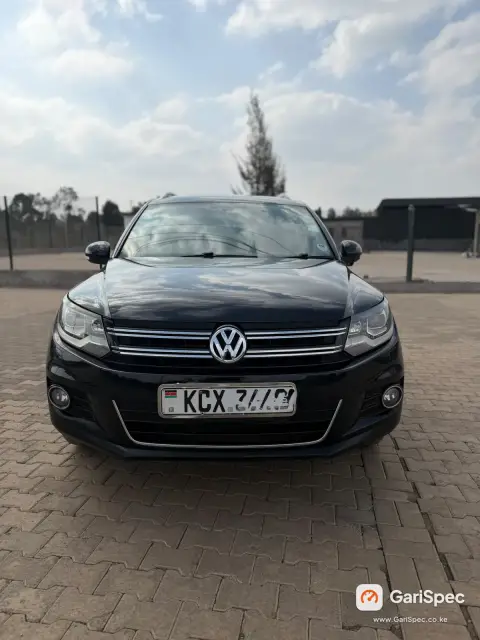 2012 Volkswagen TiguanKES 1,750,000 · 126,000 km · Petrol · Nairobi177 hp · 280 Nm · 2.0L 4-cyl turbo
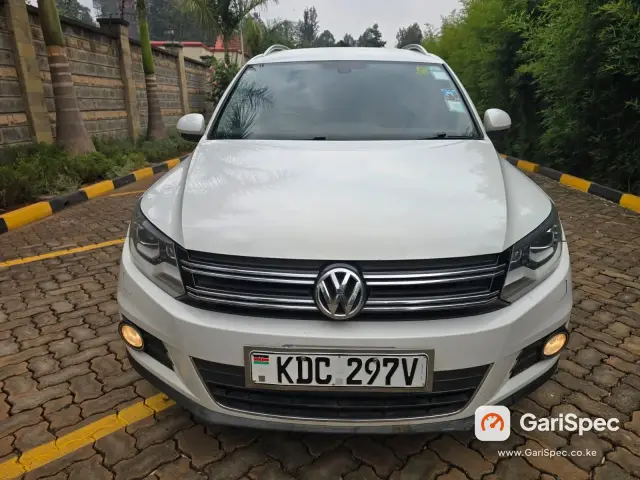 2014 Volkswagen TiguanKES 1,880,000 · 110,000 km · Petrol · Nairobi160 hp · 240 Nm · 1.4L 4-cyl turbo
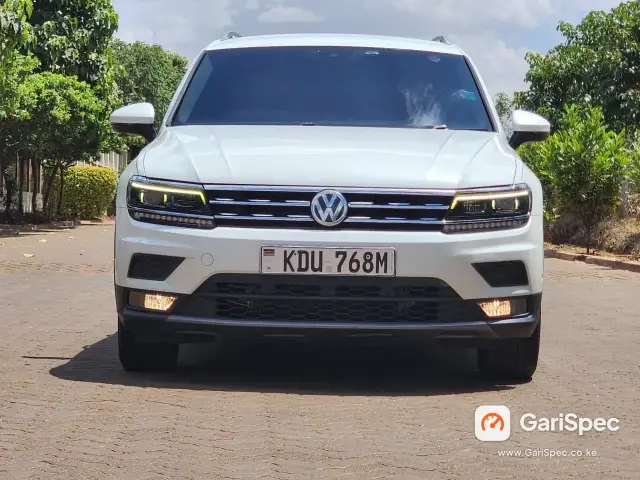 2018 Volkswagen TiguanKES 3,850,000 · 43,602 km · Petrol · Nairobi150 hp · 250 Nm · 1.4L 4-cyl turbo
- 2012 Volkswagen TiguanKES 1,780,000 · 117,000 km · Petrol · Nairobi177 hp · 280 Nm · 2.0L 4-cyl turbo
- 2020 Volkswagen TiguanKES 4,750,000 · 88,405 km · Petrol · Nairobi184 hp · 320 Nm · 2.0L 4-cyl
- 2025 Volkswagen Tiguan eTSI R LineKES 4,385,000 · 5,000 km · Petrol · Nairobi148 hp · 250 Nm · 1.5L 4-cylDelivery available
- 2021 Volkswagen Tiguan TSI EleganceKES 2,298,000 · 63,400 km · Petrol · Nairobi150 hp · 250 Nm · 1.5L 4-cyl turboDelivery available
- 2024 Volkswagen Tiguan TSI EleganceKES 2,814,000 · 47,792 km · Petrol · Nairobi150 hp · 250 Nm · 1.5L 4-cyl turboDelivery available
- 2014 Volkswagen TiguanKES 1,890,000 · 136,000 km · Petrol · Nairobi160 hp · 240 Nm · 2.0L 4-cyl turbo
- 2018 Volkswagen Tiguan R-Line EditionKES 3,999,000 · 41,280 km · Petrol · Nairobi150 hp · 250 Nm · 1.4L 4-cyl turbo
- 2018 Volkswagen Tiguan R-LineKES 3,999,000 · 51,884 km · Petrol · Nairobi150 hp · 250 Nm · 1.4L 4-cyl turbo
- 2014 Volkswagen TiguanKES 1,850,000 · 88,000 km · Petrol · Nairobi160 hp · 240 Nm · 1.4L 4-cyl turbo
Frequently asked questions
How much horsepower does the Volkswagen Tiguan have?
Depending on the version, the Volkswagen Tiguan makes 150–184 hp — 1.4L 4-cyl turbo (2011–2016): 160 hp and 240 Nm; 2.0L 4-cyl turbo (2011–2016): 177 hp and 280 Nm; 1.4L 4-cyl turbo (2016–2024): 150 hp and 250 Nm; 2.0L 4-cyl (2016–2020): 184 hp and 320 Nm. The Kenyan sweet spot: safe, quick overtakes on Nairobi–Nakuru with room to spare when fully loaded.
What is the Volkswagen Tiguan’s fuel consumption per km?
1.4L 4-cyl turbo: 12 km/L (8.3 L/100 km) — about KES 18.9 per km (≈ KES 28,400 a month for 1,500 km); 2.0L 4-cyl turbo: 11.8 km/L (8.5 L/100 km) — about KES 19.2 per km (≈ KES 28,900 a month for 1,500 km); 1.4L 4-cyl turbo: 14.1 km/L (7.1 L/100 km) — about KES 16.1 per km (≈ KES 24,100 a month for 1,500 km); 2.0L 4-cyl: 12.5 km/L (8 L/100 km) — about KES 18.2 per km (≈ KES 27,200 a month for 1,500 km). Costs use KES 226.96 per litre of petrol (EPRA Nairobi, 15 Oct – 14 Nov 2026) and diesel at KES 227.76/L. These are factory figures — Nairobi traffic uses more.
What is the ground clearance of the Volkswagen Tiguan?
About 190 mm (19 cm) to 200 mm (20 cm). Handles most estate roads, speed bumps and the odd murram stretch.
What engine does the Volkswagen Tiguan use?
The Volkswagen Tiguan in Kenya comes with: 1.4L CAXA turbo inline-4; 2.0L CCZA turbo inline-4; 1.4L CZDA turbo inline-4; 2.0L EA888 inline-4. A simple layout, but Volkswagen parts cost more than Toyota’s and are mostly found in Nairobi and major towns — use a specialist.
Is the Volkswagen Tiguan 2WD, AWD or 4WD?
Versions sold in Kenya are AWD, FWD. AWD adds grip in the rains and on murram, but there is no low range for serious off-roading.
Are Volkswagen Tiguan spare parts available in Kenya?
Volkswagen parts are available in Nairobi and other major towns, but cost more than Toyota parts and some need ordering. Use a mechanic who knows the brand.
How many seats does the Volkswagen Tiguan have?
5 seats.
Related
- Spec School — what every spec means
- Import a Volkswagen Tiguan — KRA duty and landed cost
Typical factory figures for each version; versions marked “GariAI lookup” come from manufacturer data and haven’t been checked by our team yet. Individual cars vary with trim, market and condition — confirm against the car’s documents and auction sheet. Spot a mistake? Tell us.