Toyota Mark II specs, fuel consumption & ground clearance
The Toyota Mark II in Kenya: 2 versions from 1996–2004, 138–200 hp, 10.5 km/L, 135–150 mm ground clearance.
Updated
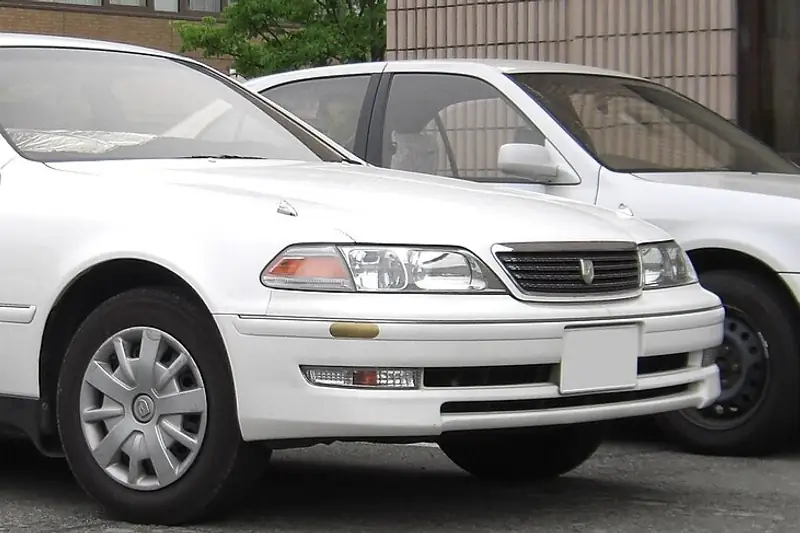
Pictured: 1998–2000 Toyota Mark II. Photo: TTTNIS · Public domain, Wikimedia Commons
All versions at a glance
| Version | Power | Torque | Clearance | Economy | Fuel / month* |
|---|---|---|---|---|---|
2.5L 6-cyl (X100) 2.5L 1JZ-GE inline-6 · Automatic · RWD · 1996–2000 | 200 hp | 250 Nm | 150 mm | 10.5 km/L | KES 32,400 |
2.0L 6-cyl (X80) 2.0L 1G-FE inline-6 · Automatic · RWD · 1997–2004 | 138 hp | 180 Nm | 135 mm | 10.5 km/L | KES 32,400 |
*1,500 km a month at KES 226.96 per litre of petrol (EPRA Nairobi, 15 Oct – 14 Nov 2026) (diesel: KES 227.76/L). Typical factory figures — individual cars vary.
Toyota Mark II 2.5L 6-cyl (1996–2000)
Generation X100 · 1996–2000 · source: GariAI lookup of manufacturer data
- Power
- 200 hp
- Torque
- 250 Nm
- Engine
- 2.5L 6-cyl (2.5L 1JZ-GE inline-6)
- Engine size
- 2,491 cc
- Cylinders
- 6
- Fuel
- Petrol
- Transmission
- Automatic
- Drivetrain
- RWD
- Ground clearance
- 150 mm
- Fuel economy
- 10.5 km/L
- Fuel tank
- 70 litres
- Weight
- 1,400 kg
- Seats
- 5
- 0–100 km/h
- 8.5 s
Kenya Fit
- Parts everywhereToyota spares are sold in every town and on Kirinyaga Road, and every mechanic knows them.
- Easy overtaking200 hp makes overtaking lorries on the Nairobi–Nakuru highway quick and safe.
What it means in plain English
Power — 200 hp, “Confident”. The Kenyan sweet spot: safe, quick overtakes on Nairobi–Nakuru with room to spare when fully loaded.
Torque — 250 Nm, “Moderate”. Pulls a family car well. You will hear the engine work up the Kikuyu–Limuru escarpment.
Ground clearance — 150 mm, “Saloon”. Fine on tarmac. Take bumps slowly, at an angle, and avoid deep ruts.
Fuel economy — 10.5 km/L, “Average”. Typical for an SUV or larger saloon. At KES 226.96 per litre of petrol (EPRA Nairobi, 15 Oct – 14 Nov 2026), 1,000 km costs about KES 21,600, 1,500 km about KES 32,400 and 2,500 km about KES 54,000.
Engine — 6 cylinders, “The silk-smooth cruiser”. Naturally balanced and refined, with effortless highway pace. Noticeably thirstier than a 4. Servicing costs more, but parts for Toyota/Lexus V6s are easy to find.
The 1999 Toyota Mark II belongs to the eighth generation (X100) and remains a revered classic in the Kenyan automotive market. Known for its robust build quality, comfortable ride, and spacious cabin, it is a favorite for buyers seeking executive comfort on a budget. Parts availability is generally good, and mechanics are familiar with its reliable inline-six engines. While fuel economy is modest compared to modern compact cars, its durability and cruising capability on Kenyan highways make it a practical and prestigious choice.
Toyota Mark II 2.0L 6-cyl (1997–2004)
Generation X80 · 1997–2004 · source: GariAI lookup of manufacturer data
- Power
- 138 hp
- Torque
- 180 Nm
- Engine
- 2.0L 6-cyl (2.0L 1G-FE inline-6)
- Engine size
- 1,998 cc
- Cylinders
- 6
- Fuel
- Petrol
- Transmission
- Automatic
- Drivetrain
- RWD
- Ground clearance
- 135 mm
- Fuel economy
- 10.5 km/L
- Fuel tank
- 70 litres
- Weight
- 1,440 kg
- Seats
- 5
- 0–100 km/h
- 10.8 s
Kenya Fit
- Parts everywhereToyota spares are sold in every town and on Kirinyaga Road, and every mechanic knows them.
- Low — mind the bumpsOnly 135 mm of ground clearance: take bumps slowly, at an angle, and avoid deep ruts.
What it means in plain English
Power — 138 hp, “Everyday”. Comfortable in Nairobi traffic and fine on the highway. Overtaking a lorry needs a long clear stretch.
Torque — 180 Nm, “Moderate”. Pulls a family car well. You will hear the engine work up the Kikuyu–Limuru escarpment.
Ground clearance — 135 mm, “Low”. Will scrape on many Kenyan bumps and potholes. Best kept on smooth tarmac.
Fuel economy — 10.5 km/L, “Average”. Typical for an SUV or larger saloon. At KES 226.96 per litre of petrol (EPRA Nairobi, 15 Oct – 14 Nov 2026), 1,000 km costs about KES 21,600, 1,500 km about KES 32,400 and 2,500 km about KES 54,000.
Engine — 6 cylinders, “The silk-smooth cruiser”. Naturally balanced and refined, with effortless highway pace. Noticeably thirstier than a 4. Servicing costs more, but parts for Toyota/Lexus V6s are easy to find.
The 2001 Toyota Mark II 2.0 offers a smooth inline‑six engine, rear‑wheel drive dynamics and a spacious sedan cabin. Its 2.0‑litre 1G‑FE delivers around 138 hp with respectable low‑end torque, while fuel consumption sits near 10 km/L, keeping running costs moderate. Comfortable leather seats, a sunroof and climate control add convenience, and the robust chassis provides good ride quality on Kenyan roads. Reliability and parts availability make it a practical choice for families and business use.
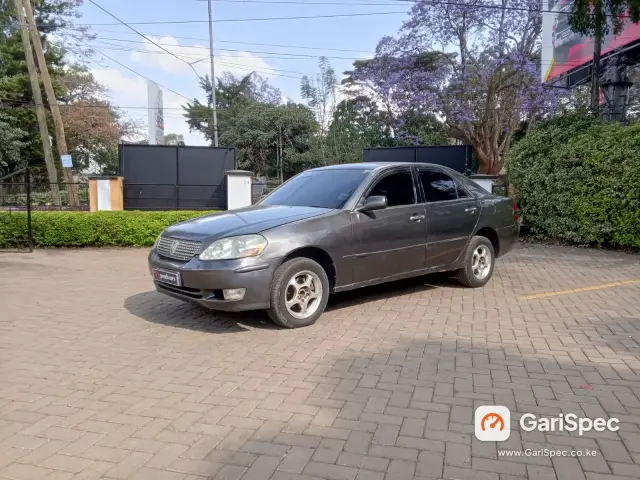
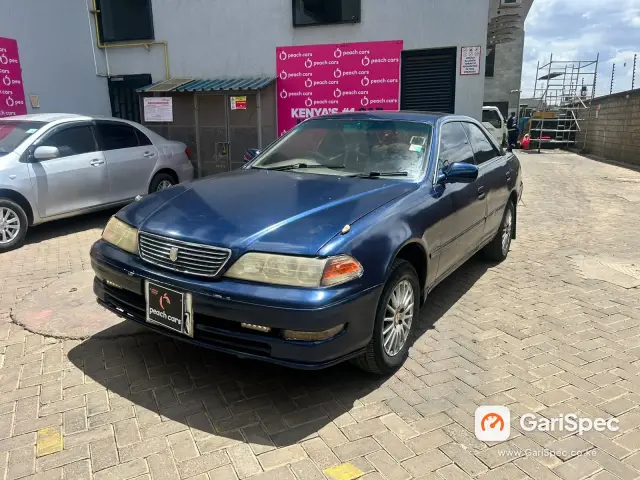
Toyota Mark II for sale now
Frequently asked questions
How much horsepower does the Toyota Mark II have?
Depending on the version, the Toyota Mark II makes 138–200 hp — 2.5L 6-cyl (1996–2000): 200 hp and 250 Nm; 2.0L 6-cyl (1997–2004): 138 hp and 180 Nm. The Kenyan sweet spot: safe, quick overtakes on Nairobi–Nakuru with room to spare when fully loaded.
What is the Toyota Mark II’s fuel consumption per km?
2.5L 6-cyl: 10.5 km/L (9.5 L/100 km) — about KES 21.6 per km (≈ KES 32,400 a month for 1,500 km); 2.0L 6-cyl: 10.5 km/L (9.5 L/100 km) — about KES 21.6 per km (≈ KES 32,400 a month for 1,500 km). Costs use KES 226.96 per litre of petrol (EPRA Nairobi, 15 Oct – 14 Nov 2026) and diesel at KES 227.76/L. These are factory figures — Nairobi traffic uses more.
What is the ground clearance of the Toyota Mark II?
About 135 mm (13.5 cm) to 150 mm (15 cm). Will scrape on many Kenyan bumps and potholes. Best kept on smooth tarmac.
What engine does the Toyota Mark II use?
The Toyota Mark II in Kenya comes with: 2.5L 1JZ-GE inline-6; 2.0L 1G-FE inline-6. Noticeably thirstier than a 4. Servicing costs more, but parts for Toyota/Lexus V6s are easy to find.
Is the Toyota Mark II 2WD, AWD or 4WD?
Versions sold in Kenya are RWD. Two-wheel drive is fine on tarmac and light murram.
Are Toyota Mark II spare parts available in Kenya?
Toyota parts are sold in every town and on Kirinyaga Road in Nairobi, and most mechanics know the brand well.
How many seats does the Toyota Mark II have?
5 seats.
Related
- Spec School — what every spec means
- Import a Toyota Mark II — KRA duty and landed cost
Typical factory figures for each version; versions marked “GariAI lookup” come from manufacturer data and haven’t been checked by our team yet. Individual cars vary with trim, market and condition — confirm against the car’s documents and auction sheet. Spot a mistake? Tell us.