Renault Fluence specs, fuel consumption & ground clearance
The Renault Fluence in Kenya: 1 version from 2013–2016, 115 hp, 15.6 km/L, 120 mm ground clearance.
Updated
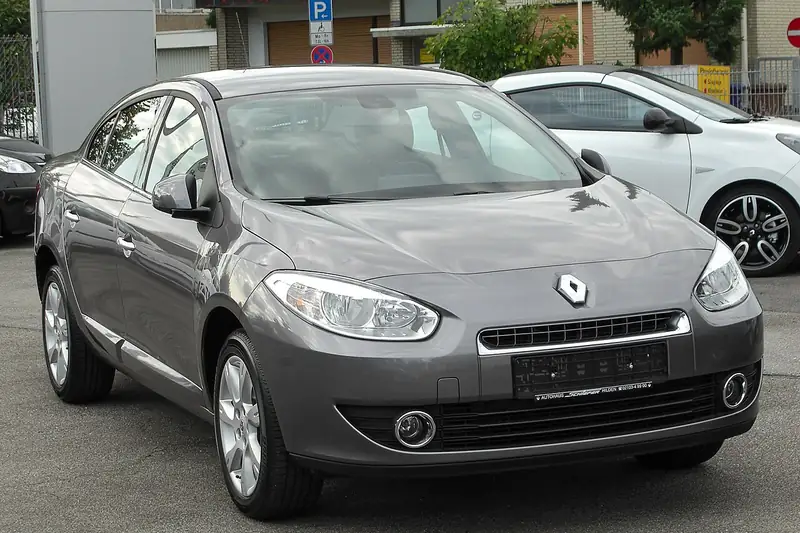
Pictured: Renault Fluence. Photo: M 93 · Attribution, Wikimedia Commons
All versions at a glance
| Version | Power | Torque | Clearance | Economy | Fuel / month* |
|---|---|---|---|---|---|
1.6L 4-cyl (Phase 2) 1.6L K4M inline-4 · CVT · FWD · 2013–2016 | 115 hp | 156 Nm | 120 mm | 15.6 km/L | KES 21,800 |
*1,500 km a month at KES 226.96 per litre of petrol (EPRA Nairobi, 15 Oct – 14 Nov 2026) (diesel: KES 227.76/L). Typical factory figures — individual cars vary.
Renault Fluence 1.6L 4-cyl (2013–2016)
Generation Phase 2 · 2013–2016 · source: GariAI lookup of manufacturer data
- Power
- 115 hp
- Torque
- 156 Nm
- Engine
- 1.6L 4-cyl (1.6L K4M inline-4)
- Engine size
- 1,598 cc
- Cylinders
- 4
- Fuel
- Petrol
- Transmission
- CVT
- Drivetrain
- FWD
- Ground clearance
- 120 mm
- Fuel economy
- 15.6 km/L
- Fuel tank
- 60 litres
- Weight
- 1,247 kg
- Seats
- 5
- 0–100 km/h
- 11.9 s
Kenya Fit
- Low — mind the bumpsOnly 120 mm of ground clearance: take bumps slowly, at an angle, and avoid deep ruts.
What it means in plain English
Power — 115 hp, “Everyday”. Comfortable in Nairobi traffic and fine on the highway. Overtaking a lorry needs a long clear stretch.
Torque — 156 Nm, “Moderate”. Pulls a family car well. You will hear the engine work up the Kikuyu–Limuru escarpment.
Ground clearance — 120 mm, “Low”. Will scrape on many Kenyan bumps and potholes. Best kept on smooth tarmac.
Fuel economy — 15.6 km/L, “Economical”. Easy on the wallet for daily driving. At KES 226.96 per litre of petrol (EPRA Nairobi, 15 Oct – 14 Nov 2026), 1,000 km costs about KES 14,500, 1,500 km about KES 21,800 and 2,500 km about KES 36,400.
Engine — 4 cylinders, “Kenya’s workhorse”. Smooth enough, economical, and strong when turbocharged — especially as a diesel. A simple layout, but Renault parts cost more than Toyota’s and are mostly found in Nairobi and major towns — use a specialist.
The Renault Fluence offers Kenyan buyers a spacious and comfortable ride with generous cabin legroom and a massive boot, making it an excellent family sedan for long-distance travel. Its European styling stands out on the road, while the suspension is well-tuned to handle typical Kenyan tarmac. Maintenance and spare parts are readily available through specialized local dealers, providing a practical and cost-effective alternative to more common Japanese imports in its class.
Renault Fluence for sale now
Frequently asked questions
How much horsepower does the Renault Fluence have?
Depending on the version, the Renault Fluence makes 115 hp — 1.6L 4-cyl (2013–2016): 115 hp and 156 Nm. Comfortable in Nairobi traffic and fine on the highway. Overtaking a lorry needs a long clear stretch.
What is the Renault Fluence’s fuel consumption per km?
1.6L 4-cyl: 15.6 km/L (6.4 L/100 km) — about KES 14.5 per km (≈ KES 21,800 a month for 1,500 km). Costs use KES 226.96 per litre of petrol (EPRA Nairobi, 15 Oct – 14 Nov 2026) and diesel at KES 227.76/L. These are factory figures — Nairobi traffic uses more.
What is the ground clearance of the Renault Fluence?
About 120 mm (12 cm). Will scrape on many Kenyan bumps and potholes. Best kept on smooth tarmac.
What engine does the Renault Fluence use?
The Renault Fluence in Kenya comes with: 1.6L K4M inline-4. A simple layout, but Renault parts cost more than Toyota’s and are mostly found in Nairobi and major towns — use a specialist.
Is the Renault Fluence 2WD, AWD or 4WD?
Versions sold in Kenya are FWD. Two-wheel drive is fine on tarmac and light murram.
Are Renault Fluence spare parts available in Kenya?
Renault parts are available in Nairobi and other major towns, but cost more than Toyota parts and some need ordering. Use a mechanic who knows the brand.
How many seats does the Renault Fluence have?
5 seats.
Related
- Spec School — what every spec means
- Import a Renault Fluence — KRA duty and landed cost
Typical factory figures for each version; versions marked “GariAI lookup” come from manufacturer data and haven’t been checked by our team yet. Individual cars vary with trim, market and condition — confirm against the car’s documents and auction sheet. Spot a mistake? Tell us.