Nissan Leaf specs, fuel consumption & ground clearance
The Nissan Leaf in Kenya: 1 version from 2017–2025, 147 hp, 155 mm ground clearance.
Updated
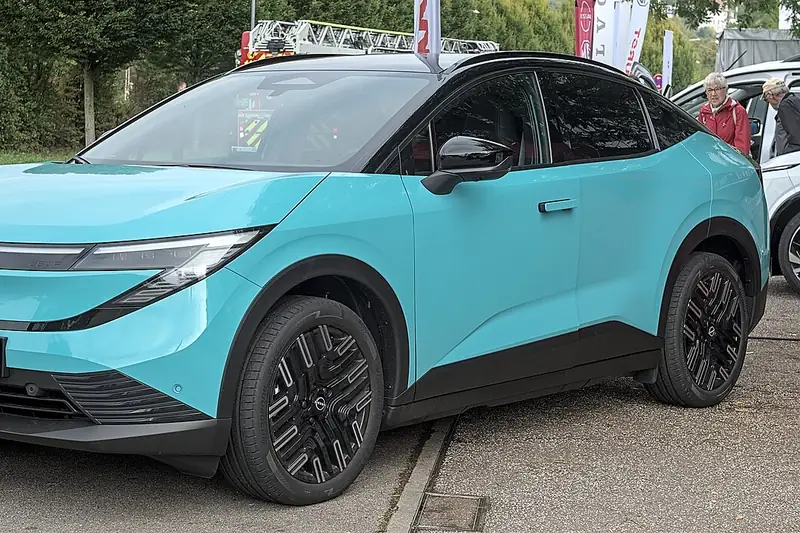
Pictured: Nissan Leaf (ZE2). Photo: Alexander Migl · CC BY-SA 4.0, Wikimedia Commons
All versions at a glance
| Version | Power | Torque | Clearance | Economy | Fuel / month* |
|---|---|---|---|---|---|
Tri-motor (ZE1) electric motor · Single-Speed (EV) · FWD · 2017–2025 | 147 hp | 320 Nm | 155 mm | 6.5 km/kWh | KES 5,800 |
*1,500 km a month at KES 226.96 per litre of petrol (EPRA Nairobi, 15 Oct – 14 Nov 2026) (diesel: KES 227.76/L). Typical factory figures — individual cars vary.
Nissan Leaf Tri-motor (2017–2025)
Generation ZE1 · 2017–2025 · source: GariAI lookup of manufacturer data
- Power
- 147 hp
- Torque
- 320 Nm
- Motor
- Tri-motor
- Fuel
- Electric
- Transmission
- Single-Speed (EV)
- Drivetrain
- FWD
- Ground clearance
- 155 mm
- Fuel economy
- 6.5 km/kWh
- Battery
- 40 kWh
- Weight
- 1,510 kg
- Seats
- 5
- 0–100 km/h
- 7.9 s
Kenya Fit
- Cheap to chargeAbout KES 5,800 a month to charge at home for 1,500 km.
- Hill & load ready320 Nm of torque climbs Mai Mahiu with a full load without strain.
What it means in plain English
Power — 147 hp, “Confident”. The Kenyan sweet spot: safe, quick overtakes on Nairobi–Nakuru with room to spare when fully loaded.
Torque — 320 Nm, “Strong”. Relaxed hill climbs and confident pulling with a full boot — no need to rev hard.
Ground clearance — 155 mm, “Saloon”. Fine on tarmac. Take bumps slowly, at an angle, and avoid deep ruts.
Fuel economy — 6.5 km/kWh, “Electric”. Charging at home costs a fraction of fuel per kilometre. At KES 25 per kWh (typical home tariff), 1,000 km costs about KES 3,800, 1,500 km about KES 5,800 and 2,500 km about KES 9,600.
Engine — Electric — no cylinders, “The silent sprinter”. Instant, silent shove the moment you touch the pedal. No gears, no vibration. No oil changes or spark plugs. Charging at home costs a fraction of fuel, but specialist repairs are still rare in Kenya.
The 2019 Nissan Leaf is an increasingly popular electric hatchback in Kenya, particularly suited for urban commuting in Nairobi and Mombasa. Its primary strength lies in its exceptionally low running and maintenance costs, completely eliminating fuel expenses and oil changes. Offering a spacious cabin, practical boot space, and smooth acceleration, it handles daily traffic effortlessly. While charging infrastructure is still growing, home charging makes it a highly economical and environmentally friendly choice for city dwellers.
Frequently asked questions
How much horsepower does the Nissan Leaf have?
Depending on the version, the Nissan Leaf makes 147 hp — Tri-motor (2017–2025): 147 hp and 320 Nm. The Kenyan sweet spot: safe, quick overtakes on Nairobi–Nakuru with room to spare when fully loaded.
What is the Nissan Leaf’s fuel consumption per km?
Tri-motor: 6.5 km/kWh — about KES 3.8 per km to charge (≈ KES 5,800 a month for 1,500 km). Costs use KES 226.96 per litre of petrol (EPRA Nairobi, 15 Oct – 14 Nov 2026) and diesel at KES 227.76/L. These are factory figures — Nairobi traffic uses more.
What is the ground clearance of the Nissan Leaf?
About 155 mm (15.5 cm). Fine on tarmac. Take bumps slowly, at an angle, and avoid deep ruts.
What engine does the Nissan Leaf use?
The Nissan Leaf in Kenya comes with: electric motor. No oil changes or spark plugs. Charging at home costs a fraction of fuel, but specialist repairs are still rare in Kenya.
Is the Nissan Leaf 2WD, AWD or 4WD?
Versions sold in Kenya are FWD. Two-wheel drive is fine on tarmac and light murram.
Are Nissan Leaf spare parts available in Kenya?
Parts for the Nissan Leaf often have to be ordered, and specialist servicing is limited — budget extra time and money for repairs.
How many seats does the Nissan Leaf have?
5 seats.
Related
- Nissan Leaf price in Kenya and import duty — KRA’s value and the import taxes
- Spec School — what every spec means
- Import a Nissan Leaf — KRA duty and landed cost
Typical factory figures for each version; versions marked “GariAI lookup” come from manufacturer data and haven’t been checked by our team yet. Individual cars vary with trim, market and condition — confirm against the car’s documents and auction sheet. Spot a mistake? Tell us.