Ford Escape specs, fuel consumption & ground clearance
The Ford Escape in Kenya: 2 versions from 2008–2012, 136–171 hp, 10.5 km/L, 190–200 mm ground clearance.
Updated
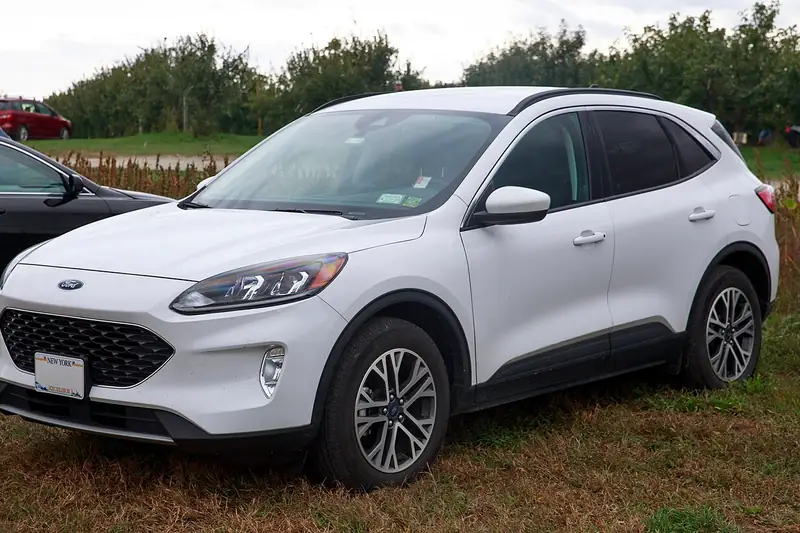
Pictured: 2021 Ford Escape Hybrid SEL AWD. Photo: Mr.choppers · CC BY-SA 3.0, Wikimedia Commons
All versions at a glance
| Version | Power | Torque | Clearance | Economy | Fuel / month* |
|---|---|---|---|---|---|
2.0L 4-cyl (U540 (second generation)) 2.0L Duratec inline-4 · Manual · FWD · 2008–2012 | 136 hp | 184 Nm | 200 mm | 10.5 km/L | KES 32,400 |
2.5L 4-cyl (U540) 2.5L Duratec inline-4 · Automatic · FWD · 2008–2012 | 171 hp | 236 Nm | 190 mm | 10.5 km/L | KES 32,400 |
*1,500 km a month at KES 226.96 per litre of petrol (EPRA Nairobi, 15 Oct – 14 Nov 2026) (diesel: KES 227.76/L). Typical factory figures — individual cars vary.
Ford Escape 2.0L 4-cyl (2008–2012)
Generation U540 (second generation) · 2008–2012 · source: GariAI lookup of manufacturer data
- Power
- 136 hp
- Torque
- 184 Nm
- Engine
- 2.0L 4-cyl (2.0L Duratec inline-4)
- Engine size
- 1,998 cc
- Cylinders
- 4
- Fuel
- Petrol
- Transmission
- Manual
- Drivetrain
- FWD
- Ground clearance
- 200 mm
- Fuel economy
- 10.5 km/L
- Fuel tank
- 64 litres
- Weight
- 1,500 kg
- Seats
- 5
- 0–100 km/h
- 9.5 s
Kenya Fit
- Murram-ready200 mm of ground clearance handles murram, potholes and tall estate bumps.
What it means in plain English
Power — 136 hp, “Everyday”. Comfortable in Nairobi traffic and fine on the highway. Overtaking a lorry needs a long clear stretch.
Torque — 184 Nm, “Moderate”. Pulls a family car well. You will hear the engine work up the Kikuyu–Limuru escarpment.
Ground clearance — 200 mm, “SUV”. Comfortable on murram, rough estate roads and through rainy-season puddles.
Fuel economy — 10.5 km/L, “Average”. Typical for an SUV or larger saloon. At KES 226.96 per litre of petrol (EPRA Nairobi, 15 Oct – 14 Nov 2026), 1,000 km costs about KES 21,600, 1,500 km about KES 32,400 and 2,500 km about KES 54,000.
Engine — 4 cylinders, “Kenya’s workhorse”. Smooth enough, economical, and strong when turbocharged — especially as a diesel. A simple layout, but Ford parts cost more than Toyota’s and are mostly found in Nairobi and major towns — use a specialist.
The 2011 Ford Escape with the 2.0‑litre Duratec engine offers a practical compact SUV solution for Kenyan drivers. Its 5‑door layout provides ample cargo space, while the modest 136 hp output delivers adequate performance for city and light off‑road use. Fuel consumption around 10 km/L keeps running costs reasonable, and a ground clearance of roughly 200 mm helps tackle rough roads. Standard features such as cruise control, Bluetooth connectivity and alloy wheels add comfort and convenience.
Ford Escape 2.5L 4-cyl (2008–2012)
Generation U540 · 2008–2012 · source: GariAI lookup of manufacturer data
- Power
- 171 hp
- Torque
- 236 Nm
- Engine
- 2.5L 4-cyl (2.5L Duratec inline-4)
- Engine size
- 2,500 cc
- Cylinders
- 4
- Fuel
- Petrol
- Transmission
- Automatic
- Drivetrain
- FWD
- Ground clearance
- 190 mm
- Fuel economy
- 10.5 km/L
- Fuel tank
- 60 litres
- Seats
- 5
- 0–100 km/h
- 9.5 s
What it means in plain English
Power — 171 hp, “Confident”. The Kenyan sweet spot: safe, quick overtakes on Nairobi–Nakuru with room to spare when fully loaded.
Torque — 236 Nm, “Moderate”. Pulls a family car well. You will hear the engine work up the Kikuyu–Limuru escarpment.
Ground clearance — 190 mm, “Raised”. Handles most estate roads, speed bumps and the odd murram stretch.
Fuel economy — 10.5 km/L, “Average”. Typical for an SUV or larger saloon. At KES 226.96 per litre of petrol (EPRA Nairobi, 15 Oct – 14 Nov 2026), 1,000 km costs about KES 21,600, 1,500 km about KES 32,400 and 2,500 km about KES 54,000.
Engine — 4 cylinders, “Kenya’s workhorse”. Smooth enough, economical, and strong when turbocharged — especially as a diesel. A simple layout, but Ford parts cost more than Toyota’s and are mostly found in Nairobi and major towns — use a specialist.
The 2010 Ford Escape offers a practical compact‑SUV package with a spacious cabin, good ground clearance for Kenyan roads and a reliable 2.5‑litre gasoline engine. Its fuel consumption is modest and maintenance costs are low, while standard features such as cruise control, Bluetooth and alloy wheels add comfort. Available in front‑wheel drive, it balances everyday usability with decent performance for city and light off‑road use.
Ford Escape for sale now
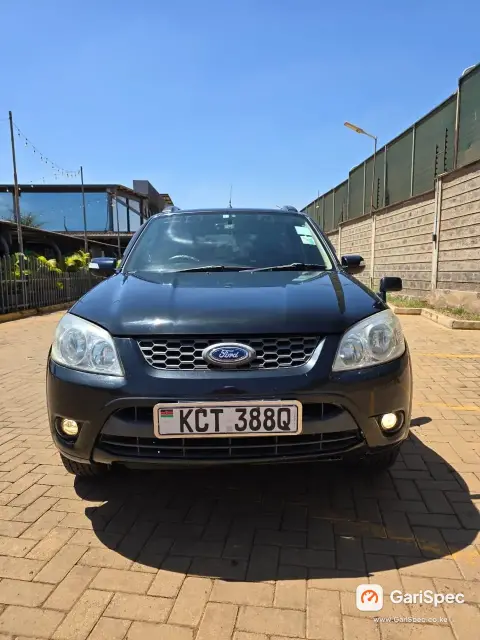
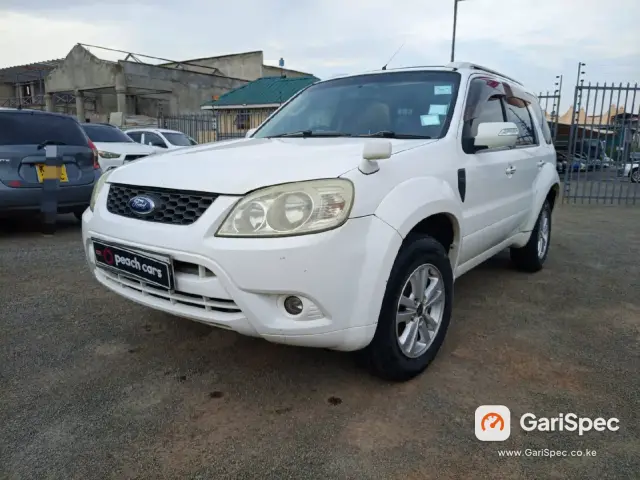
Frequently asked questions
How much horsepower does the Ford Escape have?
Depending on the version, the Ford Escape makes 136–171 hp — 2.0L 4-cyl (2008–2012): 136 hp and 184 Nm; 2.5L 4-cyl (2008–2012): 171 hp and 236 Nm. The Kenyan sweet spot: safe, quick overtakes on Nairobi–Nakuru with room to spare when fully loaded.
What is the Ford Escape’s fuel consumption per km?
2.0L 4-cyl: 10.5 km/L (9.5 L/100 km) — about KES 21.6 per km (≈ KES 32,400 a month for 1,500 km); 2.5L 4-cyl: 10.5 km/L (9.5 L/100 km) — about KES 21.6 per km (≈ KES 32,400 a month for 1,500 km). Costs use KES 226.96 per litre of petrol (EPRA Nairobi, 15 Oct – 14 Nov 2026) and diesel at KES 227.76/L. These are factory figures — Nairobi traffic uses more.
What is the ground clearance of the Ford Escape?
About 190 mm (19 cm) to 200 mm (20 cm). Handles most estate roads, speed bumps and the odd murram stretch.
What engine does the Ford Escape use?
The Ford Escape in Kenya comes with: 2.0L Duratec inline-4; 2.5L Duratec inline-4. A simple layout, but Ford parts cost more than Toyota’s and are mostly found in Nairobi and major towns — use a specialist.
Is the Ford Escape 2WD, AWD or 4WD?
Versions sold in Kenya are FWD. Two-wheel drive is fine on tarmac and light murram.
Are Ford Escape spare parts available in Kenya?
Ford parts are available in Nairobi and other major towns, but cost more than Toyota parts and some need ordering. Use a mechanic who knows the brand.
How many seats does the Ford Escape have?
5 seats.
Related
- Spec School — what every spec means
- Import a Ford Escape — KRA duty and landed cost
Typical factory figures for each version; versions marked “GariAI lookup” come from manufacturer data and haven’t been checked by our team yet. Individual cars vary with trim, market and condition — confirm against the car’s documents and auction sheet. Spot a mistake? Tell us.