BMW 5 Series specs, fuel consumption & ground clearance
The BMW 5 Series in Kenya: 2 versions from 2003–2017, 170–184 hp, 10.2–15.6 km/L, 141–142 mm ground clearance.
Updated
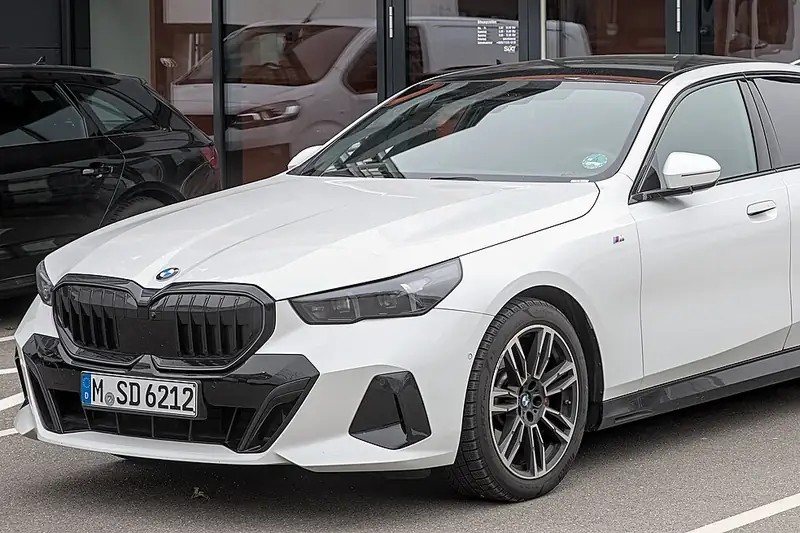
Pictured: BMW 5 Series — G60 520i. Photo: Alexander-93 · CC BY-SA 4.0, Wikimedia Commons
All versions at a glance
| Version | Power | Torque | Clearance | Economy | Fuel / month* |
|---|---|---|---|---|---|
2.2L 6-cyl (E60) 2.2L M54B22 inline-6 · Automatic · RWD · 2003–2010 | 170 hp | 210 Nm | 142 mm | 10.2 km/L | KES 33,400 |
2.0L 4-cyl turbo (F10) 2.0L N20B20 twin-scroll turbo inline-4 · Automatic · RWD · 2010–2017 | 184 hp | 270 Nm | 141 mm | 15.6 km/L | KES 21,800 |
*1,500 km a month at KES 226.96 per litre of petrol (EPRA Nairobi, 15 Oct – 14 Nov 2026) (diesel: KES 227.76/L). Typical factory figures — individual cars vary.
BMW 5 Series 2.2L 6-cyl (2003–2010)
Generation E60 · 2003–2010 · source: GariAI lookup of manufacturer data
- Power
- 170 hp
- Torque
- 210 Nm
- Engine
- 2.2L 6-cyl (2.2L M54B22 inline-6)
- Engine size
- 2,171 cc
- Cylinders
- 6
- Fuel
- Petrol
- Transmission
- Automatic
- Drivetrain
- RWD
- Ground clearance
- 142 mm
- Fuel economy
- 10.2 km/L
- Fuel tank
- 70 litres
- Weight
- 1,525 kg
- Seats
- 5
- 0–100 km/h
- 9.9 s
What it means in plain English
Power — 170 hp, “Confident”. The Kenyan sweet spot: safe, quick overtakes on Nairobi–Nakuru with room to spare when fully loaded.
Torque — 210 Nm, “Moderate”. Pulls a family car well. You will hear the engine work up the Kikuyu–Limuru escarpment.
Ground clearance — 142 mm, “Saloon”. Fine on tarmac. Take bumps slowly, at an angle, and avoid deep ruts.
Fuel economy — 10.2 km/L, “Average”. Typical for an SUV or larger saloon. At KES 226.96 per litre of petrol (EPRA Nairobi, 15 Oct – 14 Nov 2026), 1,000 km costs about KES 22,300, 1,500 km about KES 33,400 and 2,500 km about KES 55,600.
Engine — 6 cylinders, “The silk-smooth cruiser”. Naturally balanced and refined, with effortless highway pace. Noticeably thirstier than a 4. Servicing costs more, but parts for Toyota/Lexus V6s are easy to find.
The 2004 BMW 520i sedan (E60 generation) offers a refined executive driving experience with its smooth M54 inline-six engine and balanced rear-wheel-drive handling. It is prized in Kenya for highway cruising comfort, prestige, and a spacious cabin with ample luggage capacity. However, prospective owners should account for sensitive electronics, cooling system upkeep, and higher maintenance demands compared to Japanese counterparts. Using high-grade fuel and adhering to timely servicing are essential to keep running costs predictable.
BMW 5 Series 2.0L 4-cyl turbo (2010–2017)
Generation F10 · 2010–2017 · source: GariAI lookup of manufacturer data
- Power
- 184 hp
- Torque
- 270 Nm
- Engine
- 2.0L 4-cyl turbo (2.0L N20B20 twin-scroll turbo inline-4)
- Engine size
- 1,997 cc
- Cylinders
- 4
- Fuel
- Petrol
- Transmission
- Automatic
- Drivetrain
- RWD
- Ground clearance
- 141 mm
- Fuel economy
- 15.6 km/L
- Fuel tank
- 70 litres
- Weight
- 1,615 kg
- Seats
- 5
- 0–100 km/h
- 7.9 s
Kenya Fit
- Easy overtaking184 hp makes overtaking lorries on the Nairobi–Nakuru highway quick and safe.
What it means in plain English
Power — 184 hp, “Confident”. The Kenyan sweet spot: safe, quick overtakes on Nairobi–Nakuru with room to spare when fully loaded.
Torque — 270 Nm, “Strong”. Relaxed hill climbs and confident pulling with a full boot — no need to rev hard.
Ground clearance — 141 mm, “Saloon”. Fine on tarmac. Take bumps slowly, at an angle, and avoid deep ruts.
Fuel economy — 15.6 km/L, “Economical”. Easy on the wallet for daily driving. At KES 226.96 per litre of petrol (EPRA Nairobi, 15 Oct – 14 Nov 2026), 1,000 km costs about KES 14,500, 1,500 km about KES 21,800 and 2,500 km about KES 36,400.
Engine — 4 cylinders, “Kenya’s workhorse”. Smooth enough, economical, and strong when turbocharged — especially as a diesel. A simple layout, but BMW parts cost more than Toyota’s and are mostly found in Nairobi and major towns — use a specialist.
The 2012 BMW 520i (F10) is a premium executive sedan that blends sophisticated styling with driving refinement. Powered by a responsive 2.0-litre turbocharged petrol engine paired with an efficient 8-speed automatic transmission, it offers a great balance of performance and reasonable fuel economy. Its high-quality cabin, comfortable ride, and advanced safety features make it a popular choice in Kenya for professionals seeking luxury, prestige, and long-distance cruising comfort.
BMW 5 Series for sale now
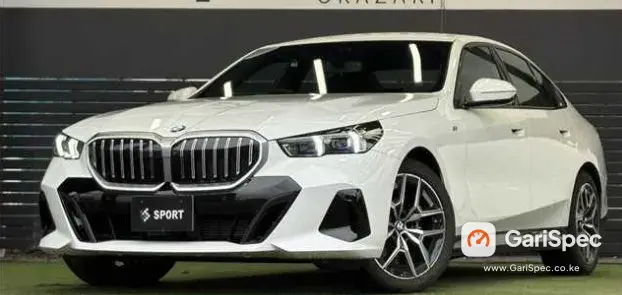 2024 BMW 5 Series 523d xDrive M-SportKES 5,154,000 · 24,000 km · Diesel · Nairobi194 hp · 400 Nm · 2.0L 4-cyl dieselDelivery available
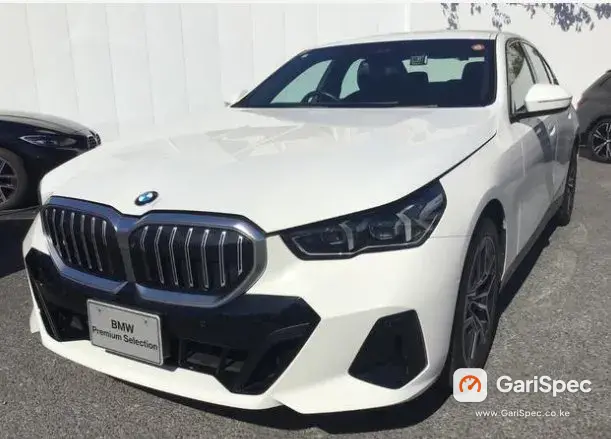 2024 BMW 5 Series 523d xDrive M-SportKES 5,558,000 · 8,000 km · Hybrid · Nairobi194 hp · 400 Nm · 2.0L 4-cyl hybridDelivery available
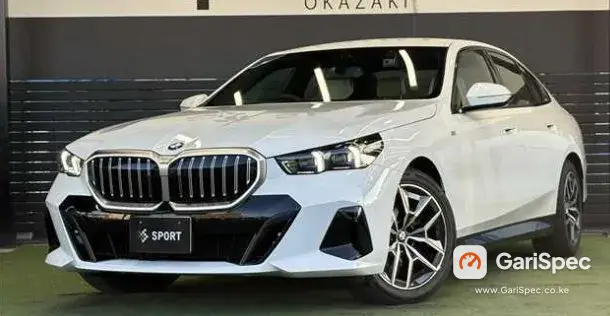 2024 BMW 5 Series 523i M-SportKES 2,989,000 · 23,000 km · Petrol · Nairobi187 hp · 310 Nm · 2.0L 4-cylDelivery available
- 2017 BMW 5 Series 523I M SportKES 3,750,000 · 87,523 km · Petrol · Nairobi152 hp · 250 Nm · 2.0L 4-cyl
- 2012 BMW 5 Series 520IKES 1,848,000 · 115,604 km · Petrol · Nairobi184 hp · 270 Nm · 2.0L 4-cyl
- 2004 BMW 5 Series 520IKES 740,000 · 174,810 km · Petrol · Nairobi143 hp · 200 Nm · 2.2L 4-cyl
Frequently asked questions
How much horsepower does the BMW 5 Series have?
Depending on the version, the BMW 5 Series makes 170–184 hp — 2.2L 6-cyl (2003–2010): 170 hp and 210 Nm; 2.0L 4-cyl turbo (2010–2017): 184 hp and 270 Nm. The Kenyan sweet spot: safe, quick overtakes on Nairobi–Nakuru with room to spare when fully loaded.
What is the BMW 5 Series’s fuel consumption per km?
2.2L 6-cyl: 10.2 km/L (9.8 L/100 km) — about KES 22.3 per km (≈ KES 33,400 a month for 1,500 km); 2.0L 4-cyl turbo: 15.6 km/L (6.4 L/100 km) — about KES 14.5 per km (≈ KES 21,800 a month for 1,500 km). Costs use KES 226.96 per litre of petrol (EPRA Nairobi, 15 Oct – 14 Nov 2026) and diesel at KES 227.76/L. These are factory figures — Nairobi traffic uses more.
What is the ground clearance of the BMW 5 Series?
About 141 mm (14.1 cm) to 142 mm (14.2 cm). Fine on tarmac. Take bumps slowly, at an angle, and avoid deep ruts.
What engine does the BMW 5 Series use?
The BMW 5 Series in Kenya comes with: 2.2L M54B22 inline-6; 2.0L N20B20 twin-scroll turbo inline-4. Noticeably thirstier than a 4. Servicing costs more, but parts for Toyota/Lexus V6s are easy to find.
Is the BMW 5 Series 2WD, AWD or 4WD?
Versions sold in Kenya are RWD. Two-wheel drive is fine on tarmac and light murram.
Are BMW 5 Series spare parts available in Kenya?
BMW parts are available in Nairobi and other major towns, but cost more than Toyota parts and some need ordering. Use a mechanic who knows the brand.
How many seats does the BMW 5 Series have?
5 seats.
Related
- Spec School — what every spec means
- Import a BMW 5 Series — KRA duty and landed cost
Typical factory figures for each version; versions marked “GariAI lookup” come from manufacturer data and haven’t been checked by our team yet. Individual cars vary with trim, market and condition — confirm against the car’s documents and auction sheet. Spot a mistake? Tell us.