Audi RS7 specs, fuel consumption & ground clearance
The Audi RS7 in Kenya: 1 version from 2020–2020, 600 hp, 8.5 km/L, 125 mm ground clearance.
Updated
All versions at a glance
| Version | Power | Torque | Clearance | Economy | Fuel / month* |
|---|---|---|---|---|---|
4.0L V8 turbo (C8) 4.0L EA825 twin-turbo V8 · Automatic · AWD · 2020–2020 | 600 hp | 800 Nm | 125 mm | 8.5 km/L | KES 40,100 |
*1,500 km a month at KES 226.96 per litre of petrol (EPRA Nairobi, 15 Oct – 14 Nov 2026) (diesel: KES 227.76/L). Typical factory figures — individual cars vary.
Audi RS7 4.0L V8 turbo (2020–2020)
Generation C8 · 2020–2020 · source: GariAI lookup of manufacturer data
- Power
- 600 hp
- Torque
- 800 Nm
- Engine
- 4.0L V8 turbo (4.0L EA825 twin-turbo V8)
- Engine size
- 3,996 cc
- Cylinders
- 8
- Fuel
- Petrol
- Transmission
- Automatic
- Drivetrain
- AWD
- Ground clearance
- 125 mm
- Fuel economy
- 8.5 km/L
- Fuel tank
- 73 litres
- Weight
- 2,065 kg
- Seats
- 5
- 0–100 km/h
- 3.6 s
Kenya Fit
- Hill & load ready800 Nm of torque climbs Mai Mahiu with a full load without strain.
- Easy overtaking600 hp makes overtaking lorries on the Nairobi–Nakuru highway quick and safe.
- Low — mind the bumpsOnly 125 mm of ground clearance: take bumps slowly, at an angle, and avoid deep ruts.
What it means in plain English
Power — 600 hp, “Performance”. Supercar acceleration. Expect bigger bills for tyres, insurance and premium fuel.
Torque — 800 Nm, “Massive”. Locomotive-like shove from a standstill. Overkill for most, glorious for some.
Ground clearance — 125 mm, “Low”. Will scrape on many Kenyan bumps and potholes. Best kept on smooth tarmac.
Fuel economy — 8.5 km/L, “Thirsty”. Budget seriously for fuel if you drive daily. At KES 226.96 per litre of petrol (EPRA Nairobi, 15 Oct – 14 Nov 2026), 1,000 km costs about KES 26,700, 1,500 km about KES 40,100 and 2,500 km about KES 66,800.
Engine — 8 cylinders, “The baritone heavyweight”. Deep rumble, huge pulling power, and serious presence on the road. Expect roughly 5–8 km/L. Insurance and parts climb sharply on European V8s.
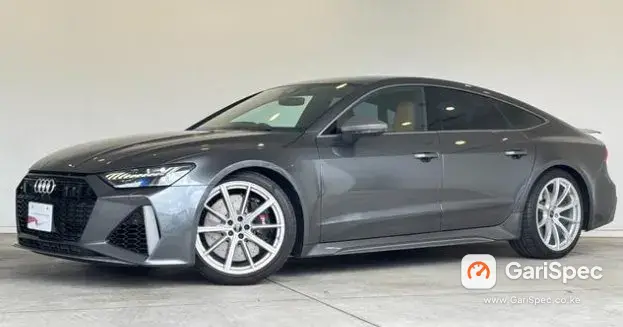
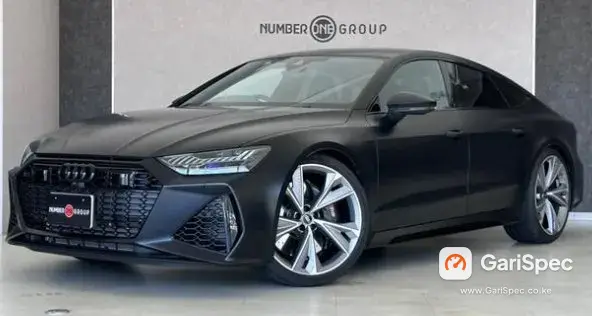
The 2020 Audi RS7 is a high-performance luxury five-door sportback powered by a twin-turbocharged V8 engine. For affluent Kenyan buyers seeking an ultimate blend of aggressive styling, blistering speed, and everyday practicality, the RS7 delivers exceptional presence on Nairobi roads. Its spacious hatch layout offers respectable cargo capacity, though running costs, fuel consumption, and maintenance require a dedicated budget. While not built for rough upcountry terrain due to its low stance, it excels on smooth highways and city cruising.
Audi RS7 for sale now
Frequently asked questions
How much horsepower does the Audi RS7 have?
Depending on the version, the Audi RS7 makes 600 hp — 4.0L V8 turbo (2020–2020): 600 hp and 800 Nm. Supercar acceleration. Expect bigger bills for tyres, insurance and premium fuel.
What is the Audi RS7’s fuel consumption per km?
4.0L V8 turbo: 8.5 km/L (11.8 L/100 km) — about KES 26.7 per km (≈ KES 40,100 a month for 1,500 km). Costs use KES 226.96 per litre of petrol (EPRA Nairobi, 15 Oct – 14 Nov 2026) and diesel at KES 227.76/L. These are factory figures — Nairobi traffic uses more.
What is the ground clearance of the Audi RS7?
About 125 mm (12.5 cm). Will scrape on many Kenyan bumps and potholes. Best kept on smooth tarmac.
What engine does the Audi RS7 use?
The Audi RS7 in Kenya comes with: 4.0L EA825 twin-turbo V8. Expect roughly 5–8 km/L. Insurance and parts climb sharply on European V8s.
Is the Audi RS7 2WD, AWD or 4WD?
Versions sold in Kenya are AWD. AWD adds grip in the rains and on murram, but there is no low range for serious off-roading.
Are Audi RS7 spare parts available in Kenya?
Audi parts are available in Nairobi and other major towns, but cost more than Toyota parts and some need ordering. Use a mechanic who knows the brand.
How many seats does the Audi RS7 have?
5 seats.
Related
- Spec School — what every spec means
- Import a Audi RS7 — KRA duty and landed cost
Typical factory figures for each version; versions marked “GariAI lookup” come from manufacturer data and haven’t been checked by our team yet. Individual cars vary with trim, market and condition — confirm against the car’s documents and auction sheet. Spot a mistake? Tell us.